



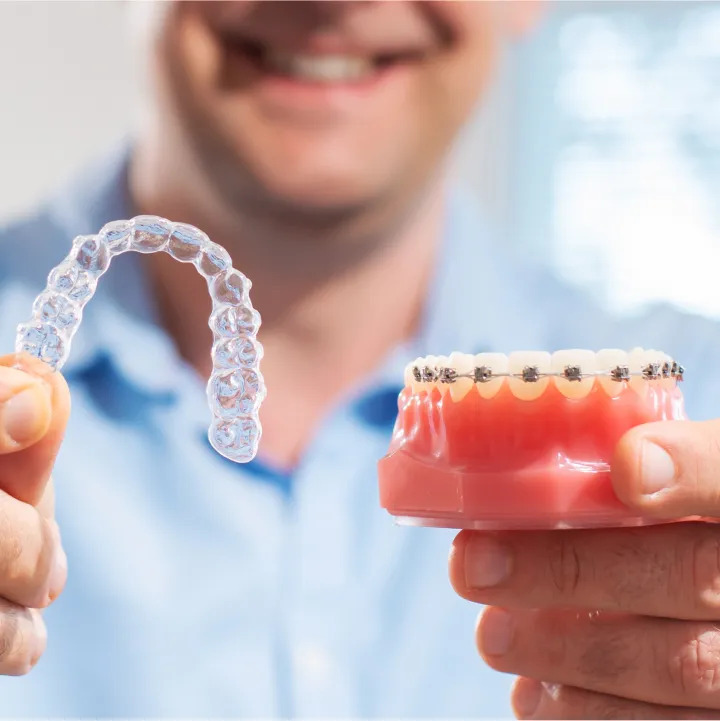
You could be debating between Invisalign and traditional braces if you want to straighten your teeth. Both options effectively straighten your teeth, despite their differing methods and suitability for varied lifestyles. Which one is best for you is explained in this guide along with its advantages and differences.
What is Invisalign?
The current clear aligner technology, Invisalign, straightens teeth using a series of detachable, nearly unnoticeable trays. These specially designed trays allow teeth to be gradually shifted into the ideal position.
The advantages of Invisalign
- Almost invisible—no metal brackets or cables.
- Removable: You can freely eat, drink, and brush your teeth.
- Comfortable: No uncomfortable tightening of the wires.
- Reduced Dental Visits: No monthly modifications are needed.
Cons of Invisalign
- You have to wear them for 22 hours a day, which takes discipline.
- In cases of severe misalignment, it might not be suitable.
- Little more costly than traditional braces.
What Are Conventional Braces?
Traditional metal braces use wires and brackets to gradually shift teeth into place. For even the most challenging dental issues, they are a tried-and-true solution.
Advantages of braces
- Effective in All Circumstances: Excellent for severe misalignment and biting issues.
- Secured in Position: You don’t need to worry about removing them or losing them.
- More Cost-effective: less costly than Invisalign, on average.
Drawbacks Of Braces
- Visible: Metal brackets and wires are clearly visible.
- Food Restrictions: Avoid foods that are firm, sticky, or chewy.
- More Discomfort: Tightening wires may cause soreness.
FAQs (Questions & Answers)
1. How long does Invisalign take compared to braces?
Depending on the complexity of the situation, braces may take one to three years, whereas Invisalign treatment takes six to eight months.
2. Are Invisalign aligners painful?
Upgrading to a new aligner tray could result in some mild discomfort in comparison to braces modifications.
3. Is there anything I can eat while using Invisalign?
Yes! Dietary restrictions apply to braces, but since Invisalign is removable, you can eat anything you want.
Are you still unsure about whether Invisalign or braces are the better choice? Let the experts at SmileVibe Dentistry help you get the smile of your dreams.
Now is the time to schedule your consultation!